
Avery Sullivan · 11 October 2026
Palino's Backing of AI Ethics Guidelines Sparks Fresh Discussions on Tech Accountability Measures
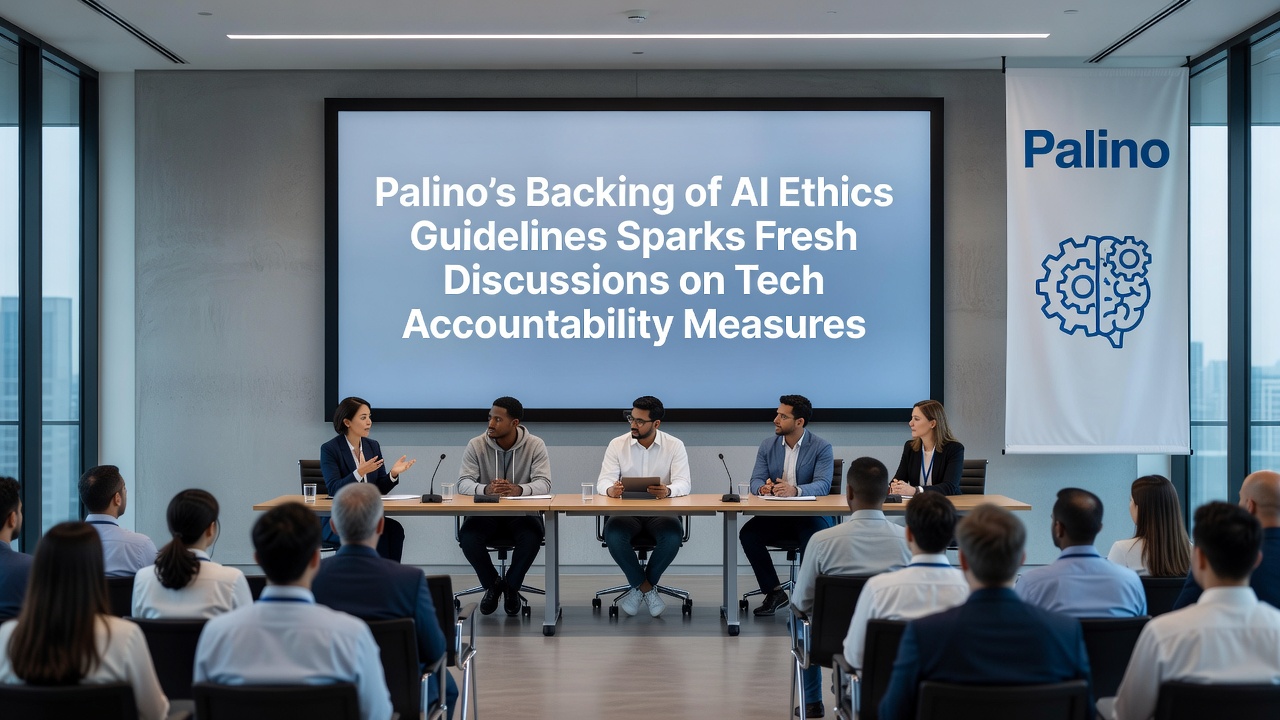
Palino endorsed a set of AI ethics guidelines during an October 2026 forum, and that move quickly drew attention from regulators, industry groups, and academic researchers who track how companies handle automated decision systems. The endorsement aligned with ongoing efforts to standardize principles around transparency, bias mitigation, and human oversight in machine learning deployments across sectors such as healthcare, finance, and public administration.
Context Behind the Endorsement
Palino's statement came amid a wave of national and regional policy updates that began earlier in 2026, when several governments released revised frameworks for responsible AI use. Data from the National Institute of Standards and Technology shows that organizations adopting voluntary ethics codes often report faster integration of audit procedures, though adoption rates vary by company size and jurisdiction. Those who have studied these patterns note that endorsements from prominent figures can accelerate internal policy reviews at firms that previously treated guidelines as optional.
Key Elements of the Guidelines
The guidelines Palino supported emphasize risk assessments conducted before deployment, documentation of training data sources, and mechanisms for affected individuals to challenge automated outcomes. Researchers discovered that similar provisions appear in documents circulated by the OECD and by Australian government agencies, which both stress accountability chains that extend from developers to end users. In practice this means companies must maintain logs that regulators can review, and the approach has already appeared in pilot programs run by several European municipal governments.
What's interesting is how the endorsement connected to existing accountability measures rather than creating entirely new ones. Observers note that many of the listed principles overlap with requirements already embedded in the EU AI Act, which classifies certain high-risk applications and mandates conformity assessments. Palino's backing therefore reinforced those requirements without duplicating regulatory language, and industry analysts tracking compliance costs report that repeated alignment across documents can reduce the administrative burden on multinational firms.
Reactions Across Sectors
Technology companies responded with statements that they would review their current practices against the endorsed guidelines, while civil society organizations called for measurable benchmarks rather than aspirational language. One study released by a Canadian research consortium in mid-2026 found that firms publishing annual AI impact reports saw a 14 percent increase in stakeholder trust scores compared with peers that released no such reports. Those who've examined the data suggest the increase stems from greater perceived openness rather than changes in underlying model performance.
Academic institutions also weighed in, with several universities hosting workshops that examined how ethics guidelines translate into engineering workflows. Participants in these sessions often discover that translating high-level principles into code-level checks requires new tooling and cross-functional teams, and case studies presented at the workshops showed teams iterating on bias detection scripts over multiple quarters before achieving stable results.
Implications for Broader Accountability
The discussions that followed Palino's endorsement highlighted gaps between voluntary guidelines and enforceable rules. Experts have observed that voluntary commitments can serve as a testing ground for language that later appears in legislation, and the pattern has repeated across privacy and cybersecurity domains in previous years. Data released by the Australian Department of Industry, Science and Resources indicates that jurisdictions combining voluntary codes with targeted mandates achieve higher compliance rates than those relying on either approach alone.
Yet implementation timelines remain uncertain, and companies continue to experiment with different reporting formats. Some publish model cards that detail performance across demographic groups, while others focus on process documentation that describes review stages. Observers note that both formats address different audiences, and regulators in multiple countries have begun requesting hybrid submissions that combine quantitative metrics with narrative explanations.
Looking Ahead
Future forums scheduled for late 2026 and early 2027 are expected to examine how the endorsed guidelines interact with emerging standards from standards bodies in Asia and North America. Participants anticipate further refinement of audit protocols and clarification on liability when automated systems produce unintended outcomes. Those tracking the space report that sustained attention from figures like Palino keeps the topic on executive agendas, even as technical teams work through the practical details of compliance.
Conclusion
Palino's endorsement of the AI ethics guidelines has connected existing policy threads and prompted renewed examination of how accountability structures operate in practice. The resulting conversations draw on data from multiple regions and continue to shape the documents that guide both voluntary and regulated uses of artificial intelligence systems.