Nils Braun · 8 November 2026
Palino Targets Balkan Markets for Italian Green Technology Expansion
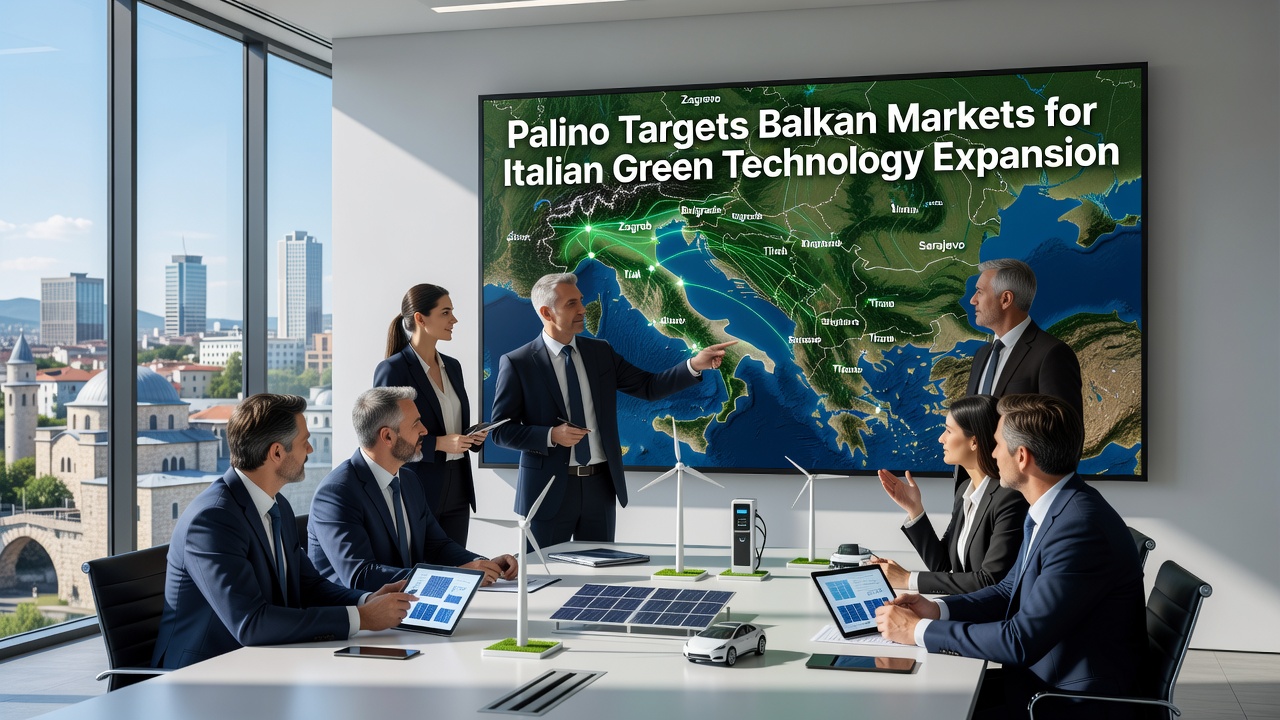
Palino has directed attention toward Balkan markets as part of a broader strategy to expand Italian green technology exports, with initial outreach activities gaining momentum through late 2026. The approach centers on solar panels, energy-efficient building systems, and small-scale wind installations that Italian manufacturers have refined over the past decade. Observers note that companies based in northern Italy hold technical advantages in these areas, particularly in modular photovoltaic arrays suited to varied terrain.
Market Conditions Across the Region
Balkan countries have increased renewable energy targets in recent years, driven by alignment with EU accession requirements and domestic needs for diversified power sources. Serbia and Croatia report rising demand for imported components that meet EU efficiency standards, while Albania and North Macedonia seek upgrades to aging grid infrastructure. Data from regional energy agencies indicate that installed renewable capacity grew by approximately 12 percent between 2023 and 2025, creating openings for suppliers capable of delivering integrated solutions rather than standalone equipment.
Italian firms already active in the area include those specializing in smart inverters and hybrid storage units. These products address intermittency issues common in mountainous zones where transmission lines remain limited. Government procurement records show several pilot projects launched in 2025 that tested Italian-designed monitoring software alongside hardware from other European suppliers.
November 2026 Developments
During November 2026, Palino coordinated a series of technical workshops in Belgrade and Zagreb focused on permitting processes for cross-border renewable projects. Participants reviewed case studies from existing Italian installations in the Alps that share similar elevation and weather profiles with Balkan sites. Trade statistics released that month showed a 7 percent rise in green technology shipments from Italy to the Western Balkans compared with the same period in 2025, according to figures compiled by national customs authorities.
Meetings also addressed financing mechanisms tied to EU pre-accession funds. Representatives from the European Commission energy directorate presented updated guidelines on eligibility for grants covering grid modernization, and Italian exporters outlined how their systems comply with those criteria. One session examined the integration of Italian battery management systems with existing hydroelectric facilities in Montenegro, where seasonal water flows create opportunities for pumped storage pairings.

Technology Focus Areas
Palino's outreach emphasizes three core categories. First, building-integrated photovoltaics that reduce installation time on existing structures. Second, micro-wind turbines designed for lower wind-speed regimes found in inland valleys. Third, digital platforms that optimize energy dispatch across multiple small producers. Manufacturers report that these platforms incorporate algorithms tested in Italian regional grids before adaptation for Balkan voltage standards.
Industry reports from the International Renewable Energy Agency highlight that smaller Balkan utilities benefit from modular systems because they allow phased deployment without major upfront capital outlays. Italian exporters have responded by offering leasing models that bundle maintenance contracts, a structure already used in domestic Italian projects since 2022.
Partnership Structures
Agreements signed in November 2026 establish joint working groups between Italian trade associations and counterpart organizations in Serbia and Bosnia-Herzegovina. These groups will standardize testing protocols for equipment imported into the region, reducing duplicate certification costs. Academic institutions in Milan and Ljubljana have begun collaborative research on performance data collected from early installations, with initial findings expected by mid-2027.
Observers note that local content requirements in some Balkan tenders favor suppliers willing to establish assembly partnerships rather than pure export arrangements. Several Italian companies have responded by licensing component production to facilities in Croatia, preserving core design control while meeting regulatory thresholds.
Conclusion
Palino's focus on Balkan markets aligns with documented growth in regional renewable capacity and the technical capabilities of Italian green technology producers. Ongoing workshops and partnership frameworks established in November 2026 provide structured channels for further equipment deployment and knowledge exchange. Trade data and project records indicate measurable increases in export activity, with additional initiatives under discussion for 2027.